What’s a science startup doing with an open-endedness team?
- Open-ended search is core infrastructure for scientific superintelligence, according to AI researcher Ken Stanley.
- At Lila Sciences, an open-endedness research team explores evolution-inspired algorithms that favor serendipitous discovery over narrow optimization.
- The team’s open-ended, “quality-diversity” algorithms feed into Lila’s AI Science Factories, applied to projects such as RNA therapeutics and quantum dot design.
During an undergraduate internship, Thomas Sheppard worked for a company that synthesized diamonds for industrial applications. The company relied on machine learning to optimize synthesis recipes, and when a batch of crystals looked to be sub-par, it was supposed to be thrown out. But one day, the crystals were weird enough that Sheppard kept analyzing the results. “Even though I was aware that they were ostensibly low quality, I was naive enough not to dismiss them entirely,” he says.
That turned out to be fortunate, as those diamonds showed unexpected potential, becoming a stepping stone toward further advances. “It was pretty surreal figuring out that the diamond samples we had discarded as junk were exactly the samples we needed all along,” Sheppard says. “The episode made me more philosophically inclined towards open-endedness.”
Open-endedness is, according to Ken Stanley, senior vice president of open-endedness at Lila Sciences, “a divergent search through a space of possibilities that continues to produce interesting discoveries indefinitely—and ideally, whose discoveries continue to become more interesting the longer the search runs.” The best example is biological evolution, he says. Organisms aren’t all optimized for one set goal, such as the ability to fly. Instead, species branch out, divergently filling ecological niches. As a result, we have birds, fish, flowers, mushrooms, bacteria, and the rest of the tree of life.
Science itself is open-ended, filled with serendipitous discoveries and new ideas building on old ones, sometimes even on those left in the refuse pile. In contrast, machine learning is often a linear process: One gives an algorithm a goal and asks it to optimize a solution—finding the hardest crystal, say. Instead of offering a variety of interesting results to build on, the system picks a winner. In this way, much of ML is called “hill-climbing,” ascending a straightish path toward improved performance. But it can get stuck atop low peaks, where open-ended meandering might have led toward bigger mountains.
For over two decades, Stanley has been inventing algorithms, inspired by evolution, meant to push solutions in interesting directions. And now he’s applying them to scientific discovery.
Starting in 2025, Stanley built an open-endedness team at Lila to design exploration methods and apply them to real-world problems. Lila aims to create scientific superintelligence, advanced AI systems that in many ways significantly exceed human intelligence across scientific domains and execute the scientific method autonomously in AI-run laboratories, called AI Science Factories. The company has already begun applying its technology to industries such as advanced materials, energy and the environment, and RNA therapeutics.
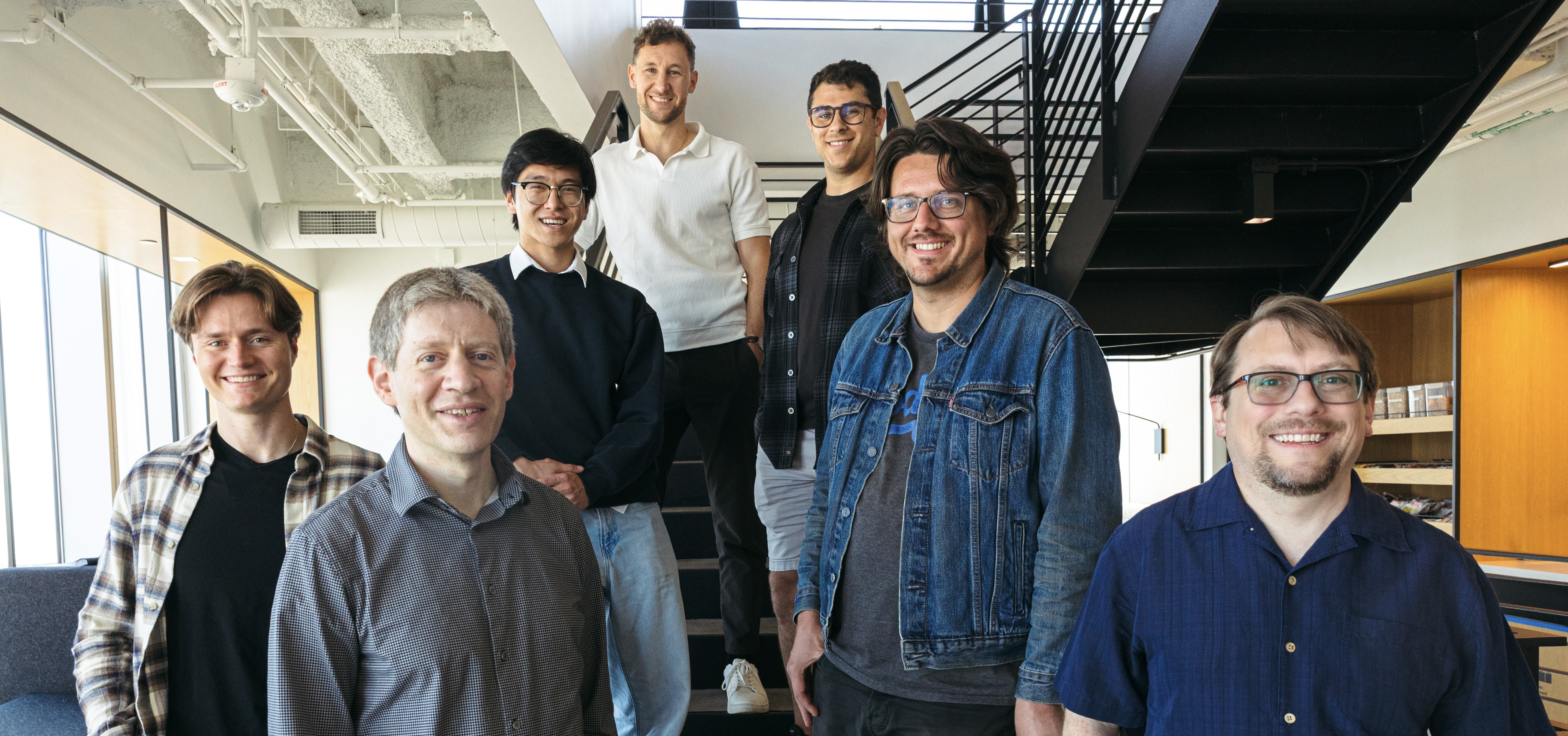
At Lila, Stanley has surrounded himself with a team of researchers exploring open-endedness, including Sheppard. It may seem odd for a startup aimed at practical solutions to invest so heavily in such a philosophical notion, but Stanley says that theory and practice are highly aligned. “Whereas open-endedness as a field is one bet among many at most labs, at a company whose primary mission is to create scientific superintelligence, it’s mission critical,” he says.
Stanley’s team works in San Francisco, surrounded by companies focused on the next fundraise, quarterly profits, or AI benchmarks—the opposite of open-endedness. Meanwhile, he and his researchers have space to noodle, to follow intriguing threads, and to invent new ways to invent.
“Open-ended algorithms are some of the, if not the, most powerful algorithms we know of to allow AI to make true breakthroughs on extremely challenging problems,” says Jeff Clune, a longtime collaborator of Stanley and cofounder of the startup Recursive Superintelligence. “Any company that is trying to automate scientific discovery and have AI help solve very difficult problems would benefit from an elite open-endedness team like the one Ken leads.”
Assembling a Team
An important moment in Stanley’s own open-ended journey occurred in 2007, when he and his students built a website called Picbreeder. Picbreeder shows users an array of images. When they click on one, the algorithm behind the image mutates into several descendants, which produce a new array. The branching can continue indefinitely.
While playing with Picbreeder, Stanley clicked on what looked like an alien face, and several generations later it became a racecar, a serendipitous surprise that changed his approach to problem solving. He and his collaborators began designing algorithms aimed at producing diverse solutions, whatever their usefulness, and found that usefulness often came as a byproduct. They then developed “quality-diversity” methods that simultaneously optimized for both variety and success. Some of these methods have been adopted widely, including by researchers at Google DeepMind, Meta, and Sakana AI.
While still teaching at the University of Central Florida, Stanley and others cofounded a company called Geometric Intelligence, which was subsequently acquired by Uber and became the company’s AI lab. Stanley also led the Open-Endedness team at OpenAI, then cofounded Maven, a social network that encourages chance encounters instead of rewarding popularity.
In 2025, Stanley was approached by Lila and met with the CEO, Geoffrey von Maltzahn, who sold Stanley on two points. First, Stanley would be able to assemble a team to work on fundamental research in open-endedness—an opportunity for the resources and runway necessary for major advances in the field. Second, the team would work alongside scientists and robots in physical labs, using their ideas to make strides in materials, chemistry, and medicine.
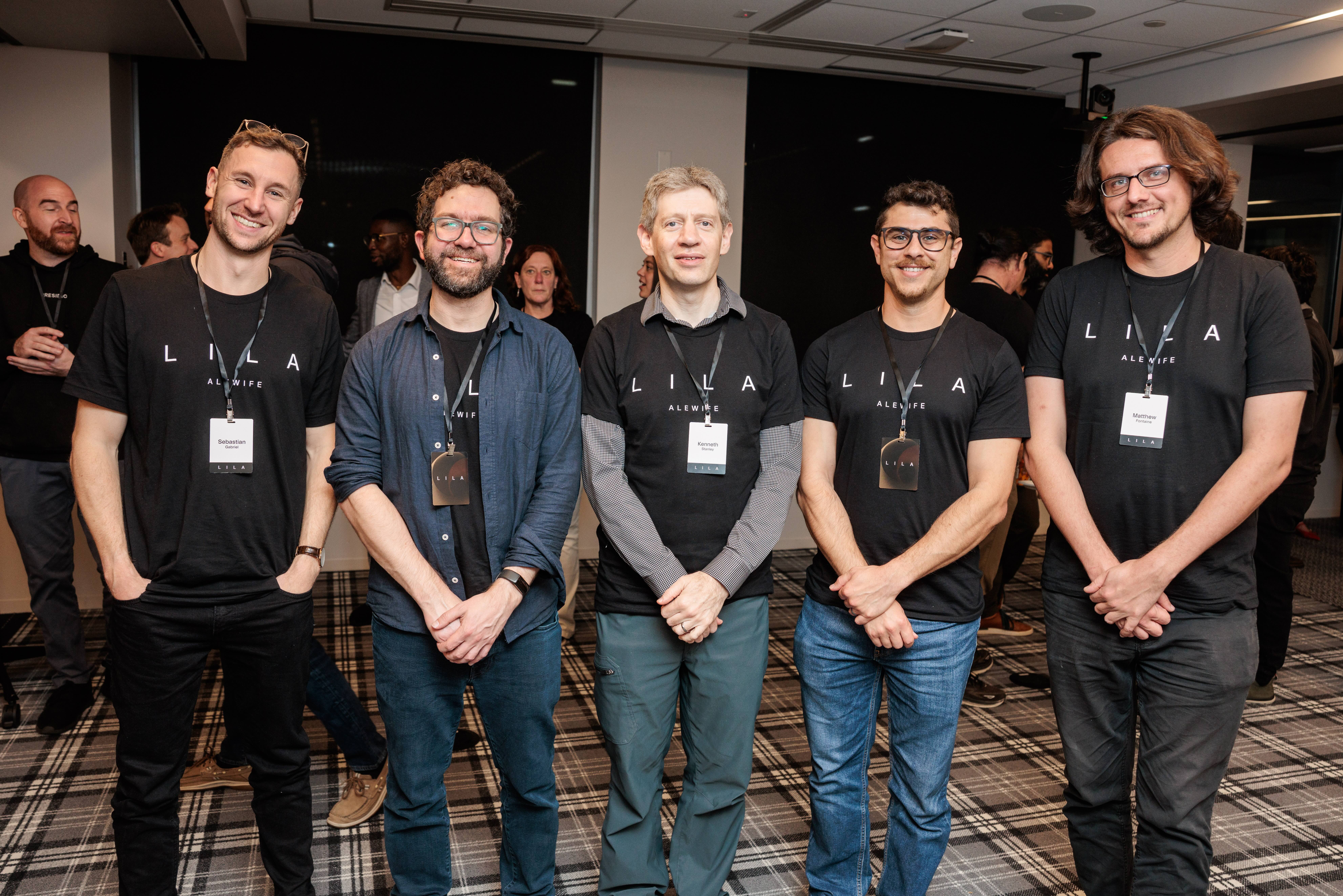
From left to right: Sebastian Gabriel, Joel Lehman, Ken Stanley, Alon Albalak, Matthew Fontaine
“It’s not lost on our team what a big opportunity that is,” Stanley says. “I mean, you don’t usually have an open-ended team adjacent to physical infrastructure like that.”
In recruiting, Stanley took the same approach he does to machine learning: He sought intellectual diversity. One of his first hires was Joel Lehman, who studied under Stanley at UCF, worked with him at Uber and OpenAI, and co-authored a book about open-endedness with him, Why Greatness Cannot Be Planned. While Uber and OpenAI treated open-endedness as “an interesting side quest,” Lehman says the alignment at Lila is “quite rare and unique.”
The open-endedness team at Lila now has nine people, including David D’Ambrosio, a principal scientist on the team who also had Stanley as a PhD advisor. D’Ambrosio was working to apply open-endedness to robotics at Google DeepMind when he reconnected with Stanley, and left “a cushy gig at a big tech company” to follow Stanley’s philosophy and join a startup. D'Ambrosio deeply felt the importance of “having promising ideas, letting them grow and mature on their own, and if they don’t work out, that’s fine,” he notes. “Even failures can inform things.”
Matthew Fontaine, another hire, earned a PhD in 2024 researching quality-diversity algorithms. Alon Albalak, who earned his PhD in the same year, came from natural language processing, a different corner of the field entirely. Sebastian Gabriel is the team’s research engineer, with a broader and more technical background. Ivy Zhang graduated from college last year and worked on artificial life at the startup Sakana AI. “One of my principles for getting diverse viewpoints is that there should always be somebody who has fresh eyes,” Stanley says.
Another person with fresh eyes is Sheppard, two years out of college, who had read one of Stanley’s papers, run related experiments in his free time, and cold-emailed the authors. Stanley saw that passion and outsider perspective as assets, as well as Sheppard’s experience applying ML to materials science. Sheppard now acts as a bridge between the open-endedness team and the applied science teams.
Team member Joel Simon studied art and computer science in college before creating a successor to Picbreeder called Artbreeder. It gained millions of users and became a successful business. At Lila, he focuses on human-algorithm interfaces.
“I do not think I’ve ever been on a team quite like this before,” D’Ambrosio says. “Some people are more theoretical, some are more grounded, and we’re all still able to bounce ideas off each other and share a guiding principle.”
Rubber, Meet Road
The team’s highest priority is algorithmic development. Quality-diversity algorithms are the “bread and butter” of the field, D’Ambrosio says. Sheppard provides an example: If you’re looking for the best restaurant in San Francisco, a traditional optimization algorithm might find the one with the highest reviews. A quality-diversity algorithm, however, might list the highest-rated restaurant at each price point in each neighborhood.
Today, the team is inventing new algorithms and sometimes “using existing algorithms in unintuitive ways to see if that generates open-endedness,” D’Ambrosio says. Some of the work involves combining large language models with open-ended techniques, as LLMs can provide some guidance toward fruitful areas. For example, in previous work with colleagues at OpenAI, Stanley and Lehman introduced a method in which LLMs suggest modifications to existing programs that are likely to be interesting.
In other work, code that prompts exploration can push LLMs away from repetitive responses. Simon is designing LLM “harnesses” that might, for example, keep track of previously suggested ideas and ask for ideas that diverge from them.
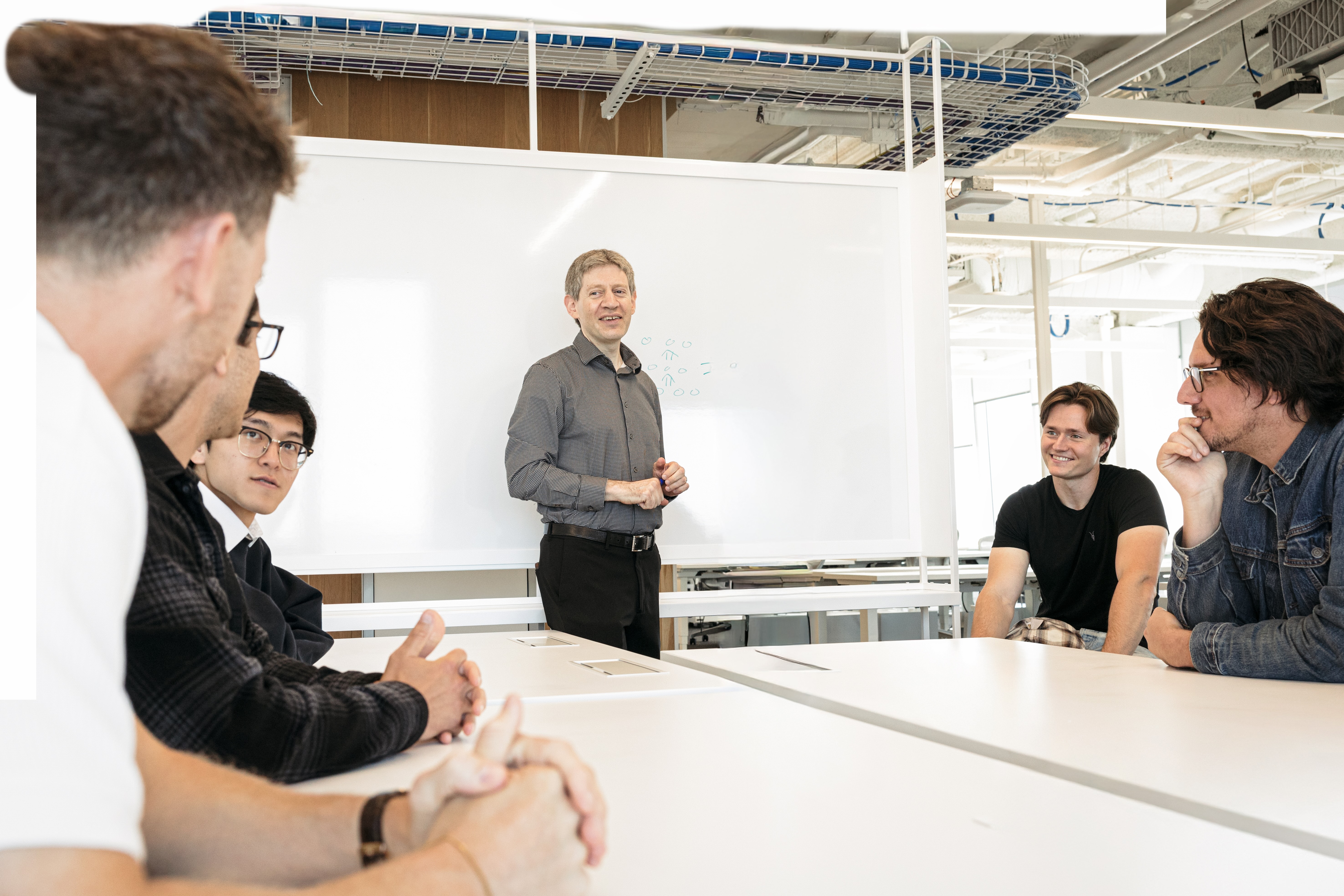
Photograph by Jamie Rain/Lunch Break Studios
“Within the team, we have a portfolio of risk,” Lehman, Stanley’s book co-author, says. “Some projects are highly ambitious, while some are more likely to succeed.”
And the diversity of research backgrounds on the team translates into a diversity of projects. Some involve rethinking LLMs, while others might try to eke out more performance; some projects have direct, real-world applications, while others veer toward more hypothetical.
“I love the fact that we have a short-term perspective where we’re trying to do things to pay the bills,” D’Ambrosio says, “then we have medium-term things where we’re looking for the right integrations, and then long-term pie-in-the-sky stuff that you wouldn’t typically see in a startup.” And, somehow, they’re all aligned. “There’s a nice trajectory where we can draw between these things,” he adds.
While diving into pure computer-science research is one appeal of the job, so, ironically, are the constraints that come with applications. Lila verifies the outputs of its AI models inside AI Science Factories (AISFs), automated experimental research labs. One project involves finding new mRNA therapeutics. Another involves creating quantum dots, crystals useful for electronics. “Lila is a place where you get to wrangle with the concreteness of science,” Lehman says. “One instrument is different from another. You’re forced to deal with the particularities.”
Within Lila, the computer scientists have back-and-forths with the domain experts on how to implement their ideas. “Having a grounded goal helps you focus the research,” D’Ambrosio adds. “You can come up with this weird algorithm that works in these weird toy domains, but when you actually put the rubber to the road you notice assumptions that don’t hold in the real world.”
“I am aware of many smaller startups that are also applying open-ended or quality-diversity algorithms to science in the real world,” Clune says, “but I’m not aware of anyone who has assembled a pioneer of the field like Ken and combined that with tremendous resources and automated laboratories.” The closest analogue he knows of is his own startup, Recursive Superintelligence, but they apply open-endedness to self-improving AI rather than to physical sciences.
The Wheel of Science
The team isn’t keeping their findings to themselves. They aim to reformulate the whole field of open-endedness. In the fall of 2026, the team plans to release a trove of papers with some of their insights, as well as a white paper covering four areas of open-ended research: generating ideas, judging the interestingness of ideas, exploring models’ internal representation of ideas, and implementing the entire “wheel of science,” a never-ending feedback loop of hypothesizing and experimentation.

Photograph by Jamie Rain/Lunch Break Studios
The aim of applying AI open-endedness to science is to instill the creativity that will lead to real, paradigm-shifting advances within and across fields. Google DeepMind’s AlphaEvolve showed an inkling of what’s possible by discovering more efficient ways to perform certain calculations. “You do see some incremental or derivative creativity that can be helpful,” Sheppard, the former diamond researcher, says. “But I think there’s probably another breakthrough that’s needed for true transformative creativity.”
Lehman remains optimistic. “I don’t think there’s necessarily something that prevents algorithms from being genuinely prolifically creative,” he says. “Biological evolution is so prolifically creative. A simple brainless algorithm produced us. It’s incredible.”
But as Lila automates the wheel of science, combining open-ended AI with robotic science factories, what role will humans play? They’ll still need to set priorities and allocate resources, for one. Additionally, the wheel of science will need humans for “sanity-checking” and to provide their own creative input, D’Ambrosio says.
Simon, who developed Artbreeder, is the person most focused on human-machine interfaces. If everyone has a swarm of AI scientists, what does that look like? “What are even the right metaphors for that?” he asks. “Does every scientist now become their own PI of their own little lab?” And how will one person’s swarm share ideas with another’s?
In Silicon Valley, people talk a lot about innovation, but open-ended systems perpetuate that process—indefinitely. As Stanley puts it, it’s not just creativity, but “creativity on steroids.”
After all, what looks like slop might, through iteration, become a breakthrough. Sheppard thinks back to his time working with diamonds: “Hopefully, we’ll start to see more and more things like that, where the happy accidents start to compound.”
Related stories

The next breakthrough begins here