From Prompt to CAR-T: Inside Lila's RNA Discovery Engine
Over the past decade, therapies built around messenger RNA (mRNA) have shifted from a promising idea to one of the most closely watched frontiers in drug development.
mRNA are powerful molecules in the cell, but they are also fragile. Enzymes degrade them quickly, resulting in a molecular half-life of just minutes to hours. That short functional lifespan limits how much protein is produced and for how long, which affects the dose, cost, and side effects of any therapy relying on mRNA.
In response, researchers have pursued more durable mRNA sequences, which could translate directly into clinical benefits: fewer injections, lower peak doses, and reduced immune burden on patients. The pursuit, however, has been rate-limited by traditional lab workflows.
Lila Sciences aims to remove that constraint and add an unmatched degree of RNA intelligence. The Cambridge-based company’s AI platform has tested more than 950,000 mRNA sequences, designing, building, and measuring each one in living cells, and fed every result back into a scientific reasoning model that gets smarter with each new experiment.
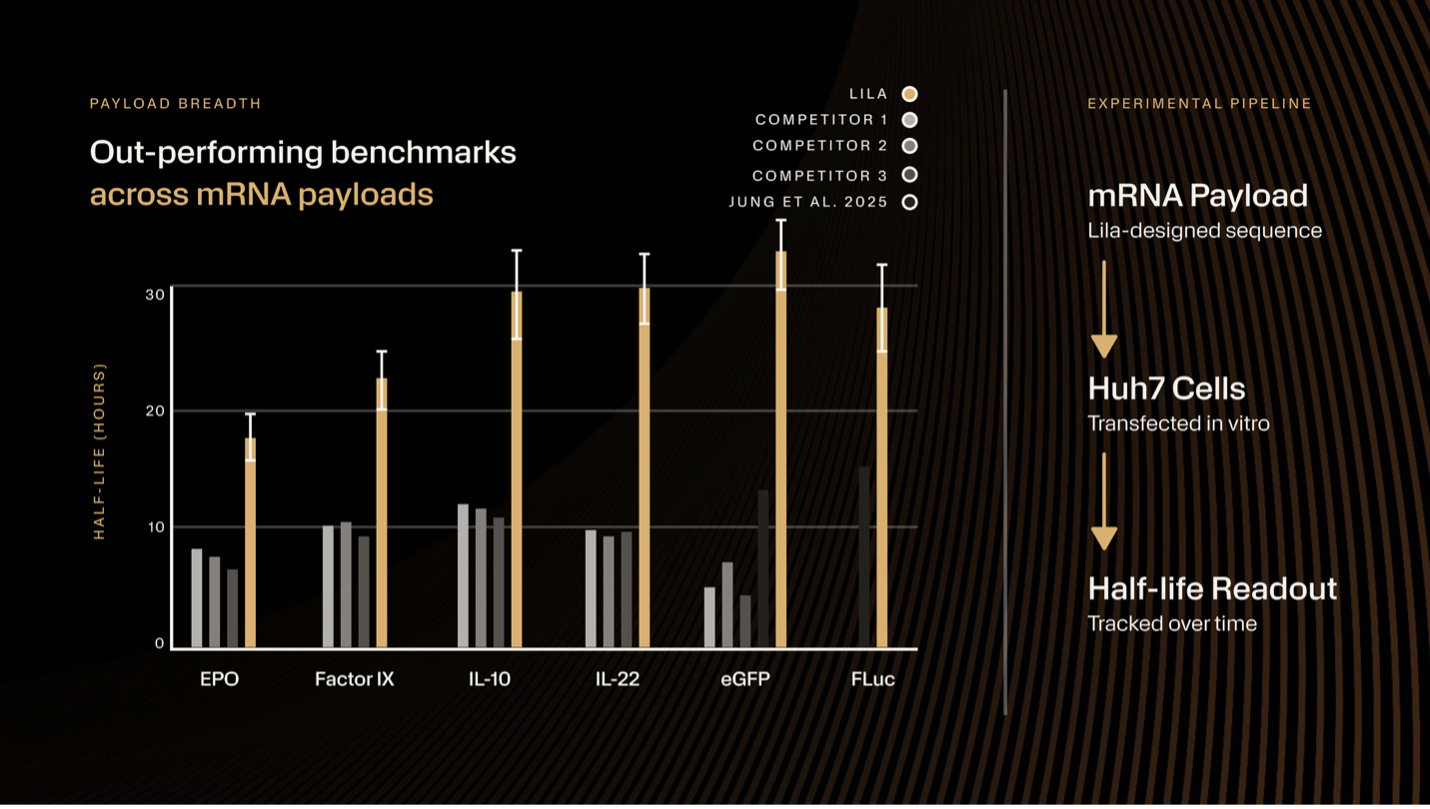
The Lila team used that platform to identify and test mRNA sequences for erythropoietin (EPO)—a protein the body uses to stimulate red blood cell production—that produced as much protein on day 15 as benchmark mRNA did on day 2. The Lila team also demonstrated similar, robust stability across other mRNAs for proteins of therapeutic relevance, including Factor IX and IL-10.
Then, in work presented at the 2026 ASGCT meeting in Boston, a team of three Lila scientists applied the platform to design an in vivo CAR-T therapy, a type of cell engineering which requires the convergence of RNA, protein, nanoparticle and cell biology expertise. The resulting therapy outperformed the leading benchmark composition in non-human primates, achieving deeper and more durable B-cell depletion. Plus, it took Lila scientists only six months and a fraction of conventional development costs.
"We're building Lila’s platform to allow scientists to go from prompt to potentially billion-dollar therapeutic designs," says Ben Kompa, Vice President and Head of AI Lab Innovation at Lila Sciences. “It’s changing how the game of science is done."
Why mRNA optimization has a scale problem
RNA medicines work by delivering genetic instructions into cells: A strand of messenger RNA tells a specific type of cell to produce a specific protein, such as a vaccine antigen, a missing enzyme, or a cancer-fighting agent. The therapeutic potential spans infectious disease, cancer, rare genetic disorders and more.
But the design space is enormous. Optimizing mRNA’s multiple functional regions across thousands of candidate sequences is beyond what a typical research lab can practically attempt. Traditional RNA workflows compound the problem further: They tend to be siloed, with sequence design, delivery vehicle development, and biological testing happening in separate groups at separate times. Each iteration cycle can take weeks to months. Scientists have no choice but to test a small number of candidates and hope one is close to optimal.
That means the final drug of any development cycle may have been the best of a small set of options, but is not necessarily the best molecule available. That gap—between what gets tested and what's possible—reflects a fundamental constraint in the development of RNA therapies.
Thankfully, mRNA design is exactly the type of combinatorial problem that Lila's autonomous science platform was built to tackle: running the full cycle of hypothesis, experiment, and iteration at a speed and scale no human team can match, and with a degree of RNA intelligence that was previously inaccessible.
An AI that learns from its own experiments
Lila’s scientists have been training a frontier-scale scientific reasoning AI on not just published literature, but on a proprietary dataset of 950,000 RNA sequences that have been physically synthesized, tested in cells in Lila’s AI Science Factories (AISFs), and fed back into the model.
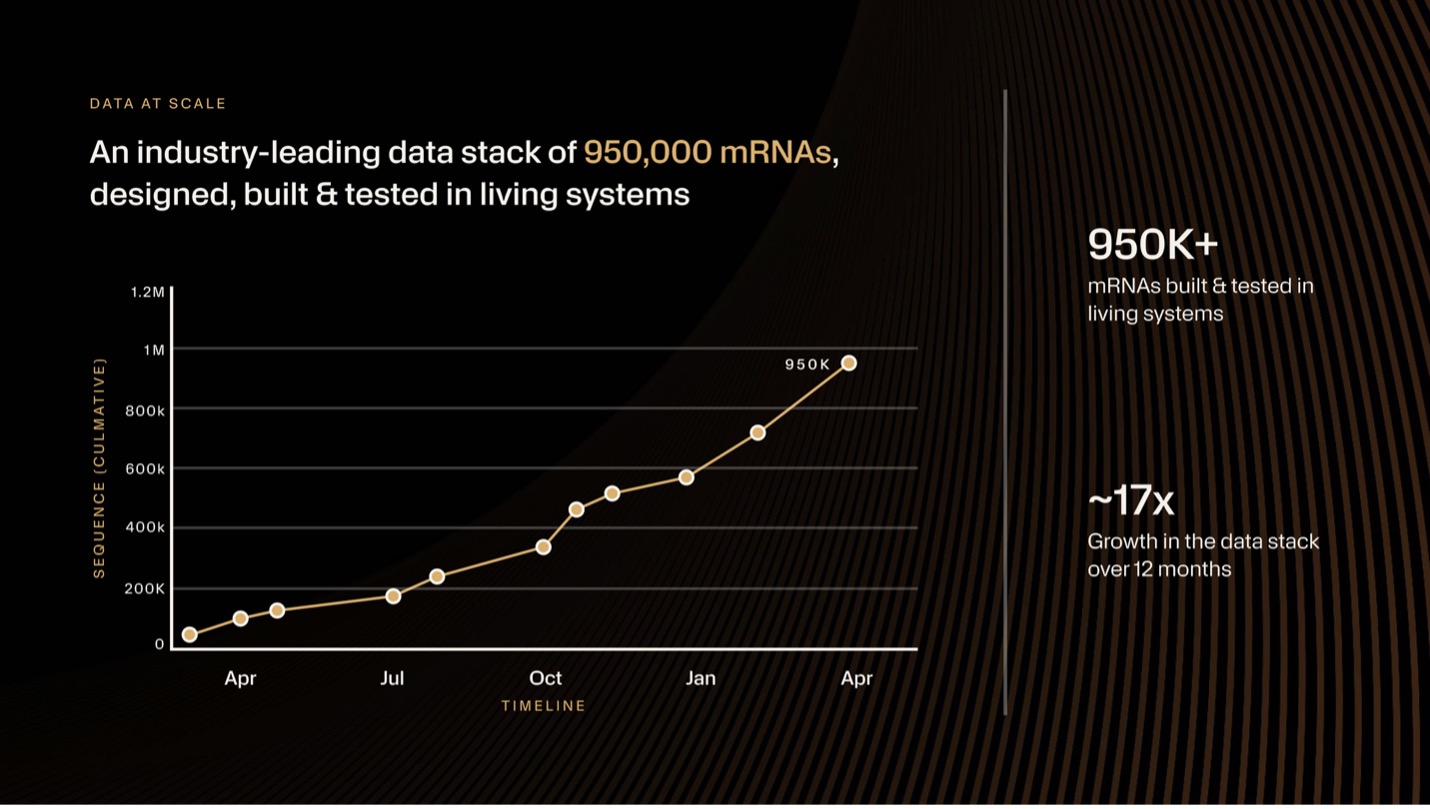
That dataset is the foundation of what makes Lila’s AI model different from a general-purpose language model: It learns the rules of RNA biology and explores hypotheses using real experimental outcomes, not from text describing them.
When a scientist prompts, in plain language, Lila’s platform with a therapeutic objective—find an mRNA sequence that confers extreme stability, for example—the AI model identifies relevant biological sequences from Lila’s proprietary database and designs candidate mRNA molecules. It co-optimizes the 5'UTR, 3'UTR, and coding region simultaneously, scoring candidates across thousands of design possibilities and preparing the top sequences for physical synthesis and testing in Lila's AISFs.
“We are able to agentically come up with new hypotheses and explore novel sequence spaces, and do it fast,” says Yue Yang, a molecular biologist at Lila who led the mRNA work.
The UTR regions are not mere flanking sequences. The 5'UTR controls how efficiently ribosomes initiate translation—that is, how readily the cell's machinery begins reading the message. The 3'UTR governs stability and degradation rate, determining how long the molecule persists before it is broken down. Meanwhile, the codon region dictates the flow of ribosomes over the message, akin to cars on a freeway. Getting all of these components dialed just right is what distinguishes a molecule that flickers briefly from one that works durably, allowing sustained protein expression.
Because Lila’s AI model draws on what it has learned from real experiments, the candidate sequences it proposes are strong to begin with, requiring fewer wet lab runs spent chasing dead ends. And because Lila's AISFs build and test those candidates by the thousands, every experimental round feeds more results back to sharpen the next set of designs. Better designs and faster testing multiply each other, rather than simply adding up.
"Lila’s platform provides an intelligence advantage and a speed advantage," says Kompa. “That combination really unlocks new possibilities in the field."
Repeat success
The EPO results illustrate what that intelligence advantage looks like in practice. It wasn’t a one-off case. Critically, Lila’s AI platform repeatedly demonstrated the same pattern of sequence stability across other mRNAs.
In follow-on experiments measuring mRNA half-life in human cells, Lila's sequences consistently outperformed benchmarks across five more protein payloads: Factor IX, IL-10, IL-22, eGFP, and firefly luciferase. Across each of them, Lila's designs showed substantially longer half-lives than published sequences from major pharmaceutical companies and published benchmarks.
"This technology is like, pinch me, is this real?" says Kompa. "In every case, we validate that the resulting protein demonstrates this ultra-stable expression."
It should be noted that these comparisons are against the best published sequences; proprietary industry formulations aren't disclosed and couldn't be compared.
Same platform, tougher target
On the July 4th weekend in 2025, after Lila’s life scientists had reliably been producing mRNA with extreme stability, CEO Geoff von Maltzahn asked the team if that sustained expression property could transfer to mRNA therapeutics. Specifically, he wondered, could it help improve CAR-T therapies?
CAR-T therapy, or chimeric antigen receptor T-cell therapy, engineers a patient's own immune cells to recognize and destroy specific target cells. The approach has produced striking results in blood cancers, including durable remissions in patients who had exhausted other options.
Yet conventional CAR-T is among the most difficult medicines to manufacture. Producing it requires extracting a patient's T cells, genetically engineering them outside the body, expanding them in culture, and reinfusing them. The process is expensive, slow, and logistically demanding; development programs routinely take years and cost hundreds of millions of dollars.
Because of that, in vivo CAR-T—delivering CAR-encoding mRNA directly into the body via a delivery vehicle, directing the patient's own immune cells to act without any ex vivo engineering—has emerged as one of the most competitive frontiers in cell therapy, attracting billions in acquisitions from AbbVie, Eli Lily, and BMS in 2025 and 2026. The appeal is straightforward: Sidestepping the complex, expensive manufacturing of conventional CAR-T could make the therapy far more accessible.
Following the call to action from von Maltzahn, a team of three Lila scientists—none with prior expertise in CAR-T biology—set out to apply the platform to the rapid development of in vivo CAR-T therapies. “Because our platform is so flexible, we were able to start immediately,” says Yang.
Within two weeks, they designed anti-CD20 CAR mRNAs, formulated them into CD8-targeted lipid nanoparticles, and started testing the constructs in cell culture. After moving through mouse models, the team advanced to non-human primates, dosed intravenously.
The results were unambiguous. Lila's mRNA payloads drove peripheral B cells to near-zero depletion by day 4 and maintained that depletion through day 14, as compared to benchmark sequences that rebounded past baseline B cell levels by day 14. Deeper and more sustained depletion could translate clinically into better disease control, lower required doses, and reduced need for repeat treatment.
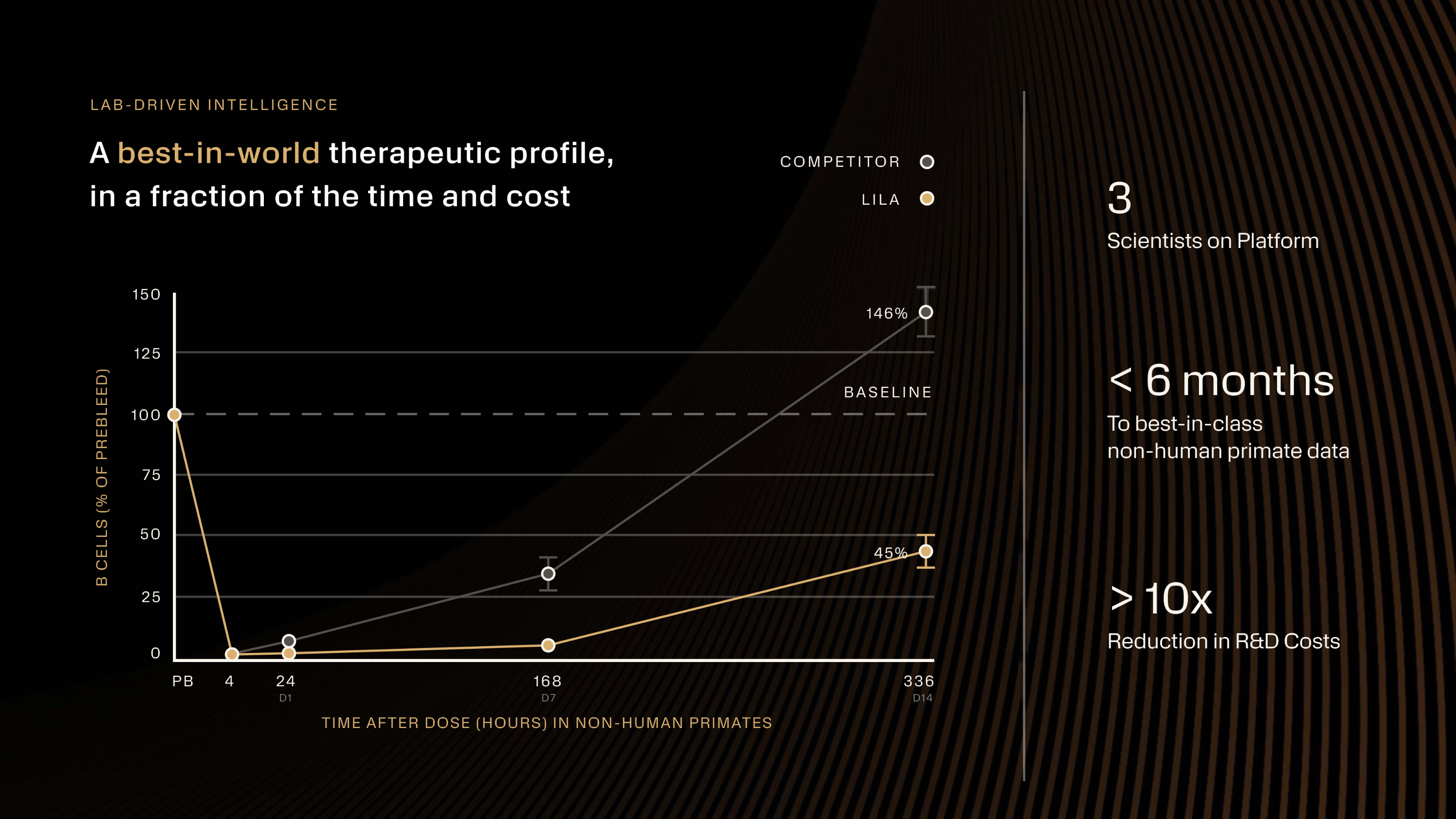
A conventional research program of this scope—cell culture, mouse studies, pharmacology, and formulation optimization—would typically require the resources of an entire company over years. Lila achieved seemingly best-in-class non-human primate data with three scientists in under six months, at an estimated ten-fold reduction in R&D costs compared to conventional approaches.
The infrastructure of discovery
Both the EPO and CAR-T results are what Lila's platform is designed to produce—not just faster versions of existing research, but discoveries that expand the frame of what is possible in a field of science.
“Lila’s platform is a research engine that combines new discoveries with therapeutic modalities or products to move the pharmaceutical industry and the world forward,” says Bob Gantzer, vice president of Next Generation Platform at Lila, who leads development of the life sciences AISFs. “We expect to perform research to translation faster than anyone else because of the extensibility of our platform.”
Today, Lila is quickly expanding that platform. Its newest AISF—a 270,000-square-foot purpose-built facility in Alewife, Massachusetts, where its AI scientific reasoning model and an autonomous laboratory will operate as a single closed-loop system—will be designed to run experimental cycles continuously, 24 hours a day, feeding every result back into the model.
At scale, the platform will explore regions of RNA design space that no human team could reach. And, somewhere in that space, there are medicines that will work better, have fewer side effects, and last longer. Lila is built to find them.
All results described here are preclinical. mRNA performance data reflect Lila Sciences' internal testing and have not been independently peer-reviewed. Comparisons to named benchmark constructs are from Lila's own experimental studies conducted under controlled conditions.
The next breakthrough begins here