How will we achieve scientific superintelligence?
- Andy Beam, Lila’s CTO, argues AI has exhausted internet-scale text data, making physical experiments the next frontier for training large language models.
- Lila’s AI Science Factories -- automated labs wired like a data center with instruments as “nodes” -- have generated over 20 trillion tokens of verified scientific reasoning.
- Training models on Lila’s growing library of experimental tokens produced performance gains that climbed in a predictable line, echoing Moore’s Law.
Over two years, large language models transformed from a research curiosity to a worldwide habit. During that period of explosive AI growth, researchers gained firsthand experience with the bitter lesson: Scale and compute beat almost everything else. They beat clever architectures, hand-built rules, all of it.
But (and there’s always a but…), scale needs fuel, and that fuel was internet data. Now, AI models have fracked all the fuel of the internet. The well has run dry. Which leaves an open, critical question for the field of AI: Where will the next internet-scale dataset come from?
At Lila, instead of building agents that learn by memorizing the internet, we are building an AI platform for agents to interact with and explore the physical world as a source of data for reinforcement learning, the current engine of progress in AI.
Reinforcement learning occurs within an environment, a system that defines what actions an AI model can try, and then returns a reward signal for how well those actions worked. In math and coding, environments have a reward signal, or verifier, built in: Math has formal systems like Lean, where a proposed proof either holds under the rules or doesn’t. Coding has sandboxes with test suites, where a program either passes or doesn’t. Both environments run entirely inside a computer.
Science has no built-in verifiers. There’s no digital test suite to determine whether an AI-generated RNA sequence will function the way it was designed to, or whether a proposed metal catalyst will resist acid.
To make science a verifiable domain for reinforcement learning, we need computational and real-world environments that provide reward signals. Within those environments, the verifier is an experiment: Reality itself informs the model whether the proposed solution is correct. And each new experiment produces a piece of data (or many pieces of data) that never existed before. In this way, science is an infinite token generator.
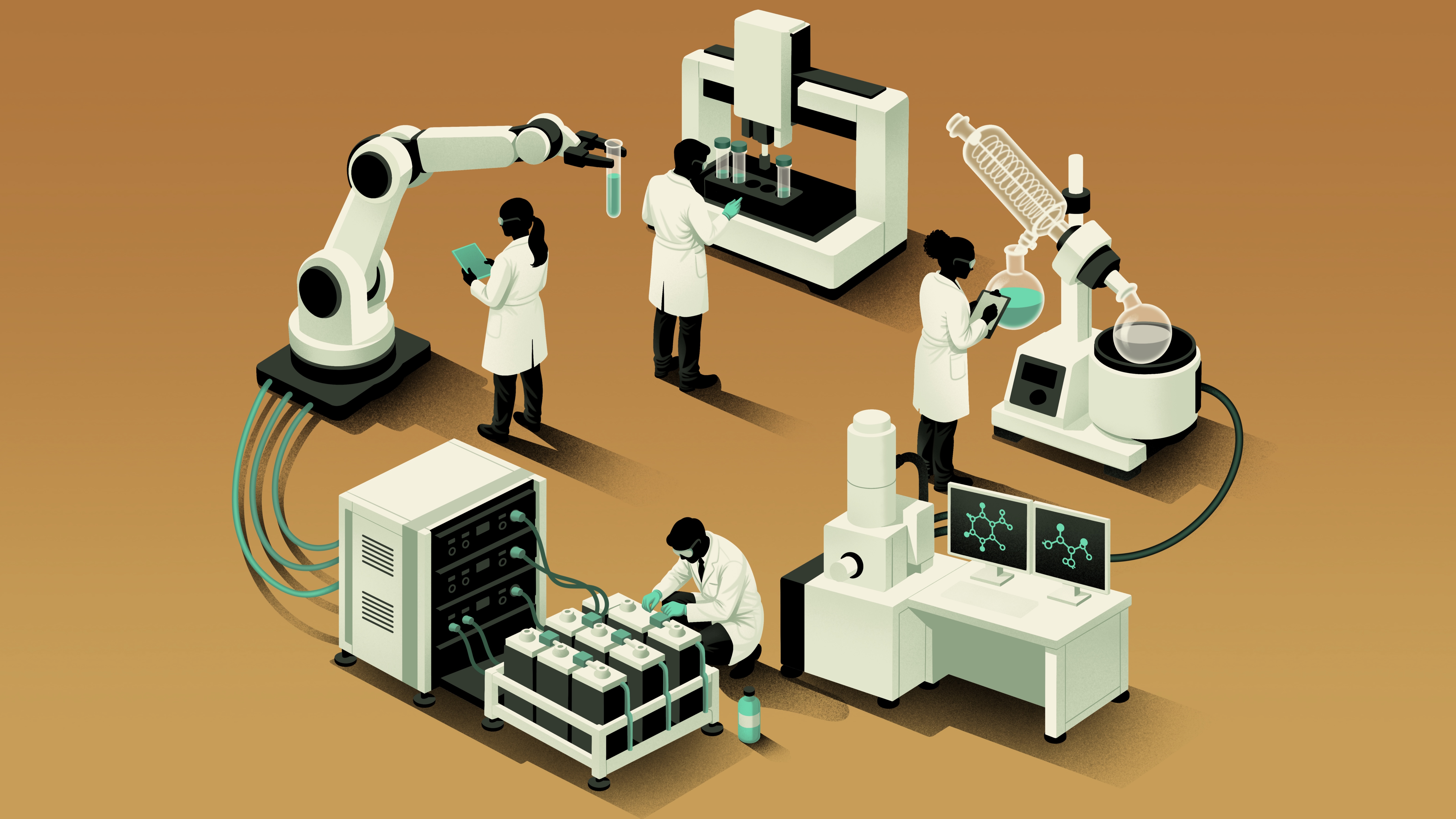
That’s why, instead of just training bigger models on the data everyone already has, we built AI Science Factories (AISFs), the physical environments for AI models to generate reward signals at scale.
AISFs rely on lab automation, software, hardware, and robotics. Think of the instruments as nodes, and the rail connecting them as a PCI bus, the same kind of bus that lets you plug a new graphics card into a computer, except in an AISF it's moving sample plates between a robot arm and a piece of lab equipment. Pair enough of those with enough GPUs and the whole thing starts to resemble a data center, one that runs experiments instead of training jobs.
At Lila, that token generator is running. We've generated more than 20 trillion tokens of experimentally verified scientific reasoning this way—each one true, new and not available anywhere else. And within the AISF environment, as model intelligence improves, we are able to recompose lab capabilities to perform net new assays to push the frontier of scientific superintelligence.
It hasn’t been easy. Experiments impose a hard constraint on the rate of progress. Protocols must be designed and samples synthesized. The reward may be noisy and requires controls, calibration and repetition. Plus, materials and instruments are expensive. Finally, time itself is a precious commodity, as the next experiment often depends on the results of the previous one.
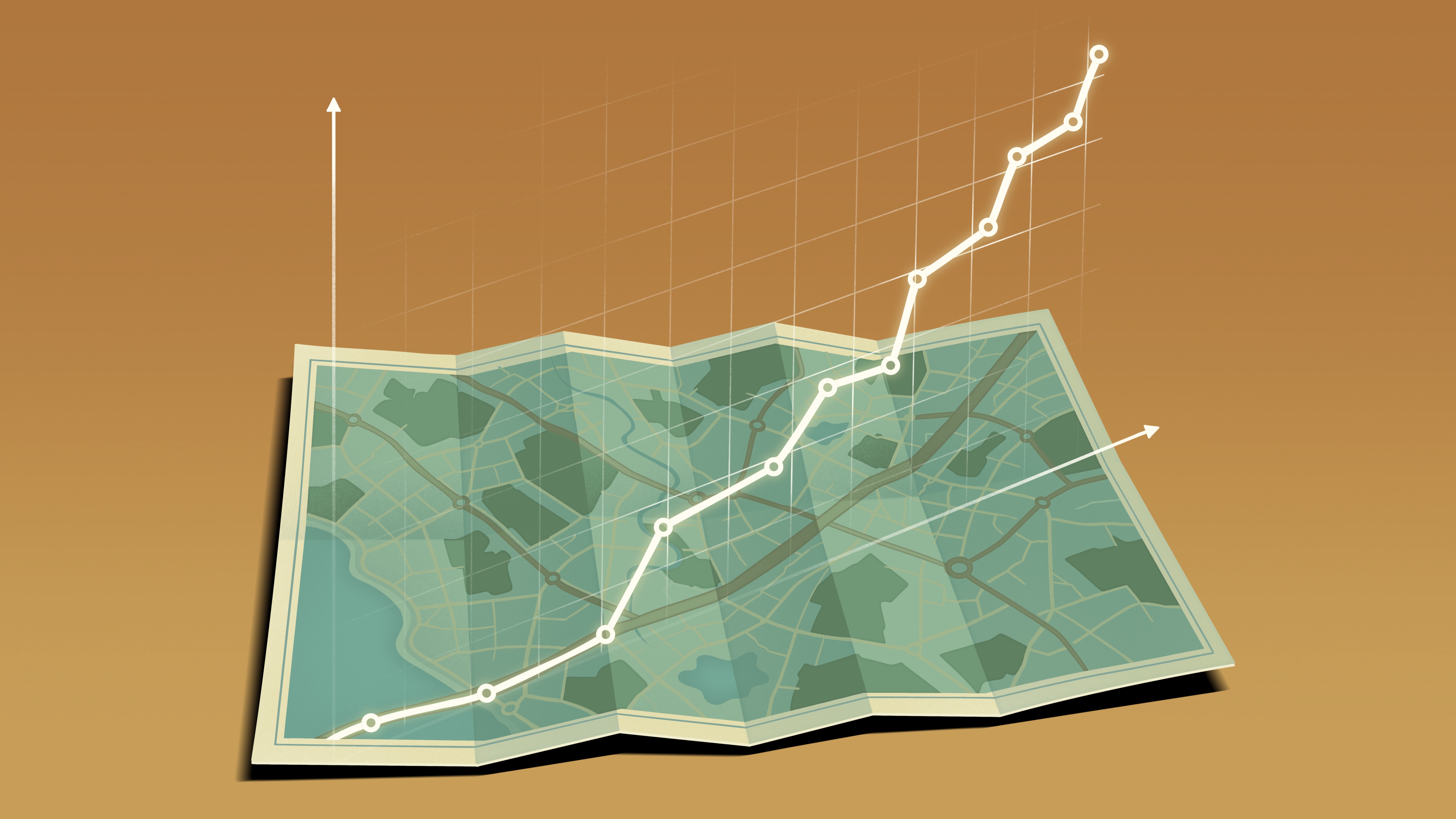
Still, this process is yielding outcomes and a clear path ahead. When we trained a family of models against a growing library of our own experimental tokens, the models’ performance climbed in a strikingly predictable line, the same kind of relationship behind Moore's Law, now showing up in scientific reasoning.
At Lila, the lab is the fuel for our models, generating new tokens every day, experiment after experiment in a feedback loop of real-world verifiers.