AI is not going to solve all the problems in the energy sector. But it might fix this one.
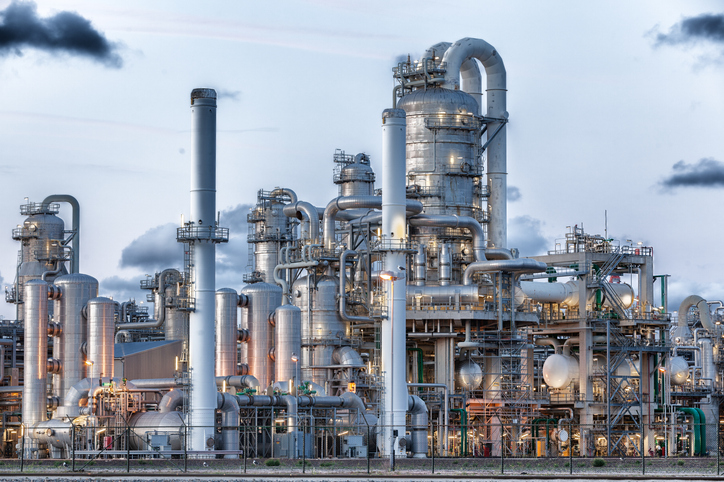
Sprawled across the sandy soils of Ras Laffan Industrial City, Qatar, Shell’s Pearl Gas to Liquids (GTL) facility is a 600-acre cathedral to energy production. The world’s largest GTL plant, built from 300,000 tons of pipe and steel, produces 14,000 B/D of liquid fuel and 120,000 B/D of natural gas liquids and ethane at full capacity.
Inside of each of the plant’s 24 GTL reactors is Shell’s secret sauce: 29,000 tubes of porous catalyst particles, each the size of a grain of rice, that convert synthesis gas to liquid hydrocarbons, the precursor to high-end diesel and base oils.
Pearl GTL is a feat of engineering, but it is also a financial cautionary tale. Shell began researching gas-to-liquid technologies in 1973. It took 20 years and 3,500 patents to achieve a small commercial plant in 1993, then nearly another 20 years to scale up to Pearl GTL. The ROI was a long, painful climb out from under the project’s spectacular $18 to 19 billion price tag, notably more than the original projected $5 billion.
Oil and gas needs an R&D engine that can actually move the needle—physically.
It is a success story that the energy industry can no longer afford to repeat. With volatile prices, fragile supply chains and the rapid energy transition, oil and gas (O&G) companies do not have 40 years for the next Pearl. They need the insight of a 40-year R&D cycle compressed to four—or fewer.
To do that, industry leaders are looking to AI for solutions. Market analysts value the AI-in-O&G sector at a staggering $16.22 billion, growing at 13% CAGR. Yet current O&G AI spend is concentrated in upstream operations (46%) and predictive maintenance (29%). Neither of those areas address better ROI for research, or reduce the cost and time from discovery to fielding.
In an industry built on the physical, virtual solutions aren’t enough. Oil and gas needs an R&D engine that can actually move the needle—physically.
At Lila Sciences, the company building scientific superintelligence the AI platform not only understands data, reasons through scenarios and makes decisions, but it runs physical tests in physical labs, learning from real-world experimentation. This “autonomous science” model is poised to compress R&D cycles from years to months and months to weeks, according to LILA's founders.
“Many of the oil and gas industry’s most critical areas of R&D, including catalysis, surface coatings, and feedstock separations, are high-cycle time problems, where the path from hypothesis to experiment and back to insight is historically slow,” says Jonathan Hennek, a chemist and chief revenue and product officer at LILA. “Those high-cycle-time problems are exactly where AI is best suited to change how we run the entire wheel of science.”
Where R&D Dollars Go to Die
Most long-term R&D projects don’t have the same rosy ending as Pearl GTL. In 2023, ExxonMobil quietly walked away from a heavily publicized, 12-year algae biofuel project. After eight years of R&D that was eventually successful—scientists doubled the oil content of the algae—another six years attempting to scale to industrial outdoor ponds failed.
The $350 million project was abandoned.
Traditional R&D often fails to account for techno-economic limitations and rapid market shifts, leading to a total loss of investment. The painful truth is that the valley of death swallows an estimated $1.08 trillion in innovation annually, according to the 2024 EU Industrial R&D Investment Scoreboard.
“The nature of the work we do is multidisciplinary and complex,” says Faezeh Habib Zadeh, an electrochemist who has worked for government, academia, and industry across the energy sector, and is now a senior scientist at LILA. “There are regulatory and compliance requirements that need to be met, and they all add time and complexity to traditional R&D.”
That added time can span years and the complexity adds delays: Delays from hypothesis to experimentation; delays between sending out samples and receiving data back; delays while waiting on multiple teams to give feedback or process data. “You want results fast. You want insight fast. You want information fast. Yet the delays pile up,” says Habib Zadeh, who hails from a family of oil workers, including a brother who works as a mud engineer in Kuwait.
Then, as the volume of the data grows, identifying patterns and information hidden within it becomes a tremendous task. Data across O&G is highly multidimensional by necessity, designed to include key properties such as adhesion, corrosion, manufacturability, cost and supply constraint. Plus, input streams can vary from plant to plant, so researchers are solving not just one optimization problem, but many.
“The real world is messy, right?” says Ashley Kaiser, a scientist focused on materials characterization at LILA and program leader for the physical sciences R&D division. “There are so many different properties of materials and so many different aspects to performance that it’s difficult for a human or a team to figure out how to optimize them.”
The ways to improve this historically slow process are clear, if not easy: fewer redundant studies, lower cost per validated candidate, faster time from experiment to decision, and, ideally, the ability to predict which solutions are scalable in an acceptable timescale.
New solutions can’t come soon enough: 48% of engineering and R&D leaders say they need to bring down costs significantly in order to stay competitive, even while expecting longer time-to-market cycles, according to a 2026 Capgemini Research Institute report.
One of those solutions may be found in a non-descript brick building in Boston.
The Zero-Friction Lab
Swirling metal flasks gently agitate samples as robotic arms deliver microscope slides to car-like robots, who zip from instrument to instrument. Liquid drips, valves click, and a soft-footed scientist pauses to observe.
It is a high-velocity production line for scientific discovery. And the entire floor is run by AI.
Other AI companies exist to predict: IBM’s Watson AI and Google’s DeepMind predict solar and wind energy production; AlphaFold predicts the shape of a protein; ChatGPT predicts the next word in a sentence.
Lila Sciences exists to test.
“An AI system can remember every experiment it's ever run, plus every experiment it ever read about running, and it updates every single time it runs an experiment. It’s like having 10,000 PhDs in one mind."
LILA, currently valued at $1.3 billion with backers including NVIDIA, Abu Dhabi Investment Authority, global venture capital firms, and the US Government, is a technology company built around Lila Iris™, a proprietary scientific reasoning model that autonomously runs every step of the scientific method: generating hypotheses, designing experiments, executing them in AI-directed labs, interpreting results and iterating.
And it is always improving. “An AI system can remember every experiment it's ever run, plus every experiment it ever read about running, and it updates every single time it runs an experiment,” says Hennek. "It’s like having 10,000 PhDs in one mind," he adds with a smile, conscious that he is one of those PhDs.
This platform runs on a new kind of physical infrastructure: the AI Science Factory (AISF™). Within AISFs, precision robotic arms operate like miniature Iron Roughnecks, but instead of moving 5,000-lb pipes, they align sample racks and shuttle materials between screening stations, imaging systems, and analytical instruments – all directed in real time by AI.
This is the best of agentic AI: By controlling every piece of equipment, the AI runs a lab just like a scientist, but can orchestrate a thousand experiments at once—plus work through the night without charging overtime.
“The time savings is real—6x faster with 52x less hands on time per materials screened,” says Kaiser, who builds out experimental workflows to develop coatings for extreme environments, including protection against corrosion, which causes a staggering 10% annual loss of the world’s metal production. At scale, compared to a standard lab, 700 materials experimentally screened would take 7 months compared to 5 weeks at LILA.
As a commercial product, Lila’s system operates on top of a company’s existing data and platforms, so using it requires no IT transformation or grand digitization project, and its system records data while working.
For example, when an offshore operator seeks a solution for corroding pipelines—which cost the industry an estimated $1.372 billion per year, according to the National Association of Corrosion Engineers—the traditional R&D approach is a years-long slog through slow-moving labs and manual testing. LILA flips the script by feeding environmental constraints and cost metrics into an AI that links directly to an AISF, bypassing the human bottleneck to design and conduct experiments. Instead of waiting years for a field-ready formulation, the system works in a continuous, real-time loop, refining and validating new materials at a pace that compresses the entire R&D lifecycle into just a few months.
It’s a physical solution to a physical problem.
Codifying the Expert Mind
Hennek, a Harvard-trained chemist, regularly finds himself surprised by the AI’s results. “Some of the materials that the system predicts will be performant don’t rationally make sense to my chemical intuition,” says Hennek. “Then we test, and, lo and behold, they have really surprising properties and performance.”
Following its inception in 2023, LILA’s AI platform has already outperformed every frontier AI model in a range of scientific tasks important to R&D in Oil & Gas, including wear & corrosion resistance prediction, catalytic activity prediction, and crystallinity prediction, among many others.
In O&G alone, the team has tested thousands of catalyst systems with custom-built experimentation equipment, as directed by the AI. In a proof-of-concept test, the platform identified earth-abundant oxygen evolution reaction (OER) catalysts that cost dramatically less than iridium incumbents, all the while utilizing roughly 95% less hands-on researcher time than traditional laboratory workflows.
In sorbents, LILA trained an AI agent to not just predict separation performance, but to measure the stability of a material. Within months – rather than years of traditional R&D – LILA’s team discovered a portfolio of sorbent materials for industrial-scale carbon capture that have superior capacity, thermal stability, and kinetic binding properties compared to leading commercial products.
But discovery is only one aspect of improving R&D efficiency. In the face of the growing workforce crisis, gathering and surfacing institutional knowledge trapped in retiring experts and siloed databases is critical, as well as making that knowledge easily accessible to those who need it.
According to Deloitte, more than half of O&G employers (53%) reported that finding top talent is difficult, while 47% said the same about retaining top talent.
At a previous company, Kaiser remembers watching, in horror, as the one person in her department who knew everything retired. “They tried to train the people under them, but a newer person will never really know as much as that expert did. It’s a huge gap,” says Kaiser. “You want to have a way to convert the knowledge that someone has into a format that others can learn from.”
LILA’s platform is designed to convert scientific knowledge and words into experimental workflows. For instance, a retiring engineer could write out a few paragraphs of how something works, and LILA’s system creates a scientific workflow or test based on the description, then runs it and iterates for a desired outcome.
“We aim to make every R&D dollar a company spends 10 times more efficient, and the team that they have working 10 times more efficient. We do that by putting this tool in their hands that has access to the entire knowledge base of that company.”
Plus, the system accesses information across divisions and siloed areas for widespread use. If a chemist needs to run a molecular dynamics simulation, for example, but does not know how, he or she can ask LILA’s platform in plain language how to run the simulation and get results right away, rather than waiting eight weeks to send out to another team.
“We aim to make every R&D dollar a company spends 10 times more efficient, and the team that they have working 10 times more efficient,” says Hennek. “We do that by putting this tool in their hands that has access to the entire knowledge base of that company.”
Finally, LILA’s system can help predict key R&D measures such as length of development. “It's not just finding the perfect solution, like the perfect catalyst, but predicting the time to scale,” says Hennek. Unsurprisingly, a company may prefer a solution that takes two years to develop, rather than one that takes 10.
As LILA grows, so do the possibilities for tightening and speeding the R&D loop. A 200,000 square foot new AISF facility is under construction in Cambridge, with plans to open in Q3 2026.
On a typical day at the AISF, Kaiser checks in on the latest experimental workflow, an exploration of coatings to prevent pipeline corrosion. Another round of testing wraps up, and as the machines slow and then still, the data is ready. Kaiser reviews it.
Once again, the AI has discovered something new, something Kaiser’s scientific intuition didn’t expect. The process “feels like we have a map, and we’ve discovered new land,” says Kaiser. She adds, with a laugh, “I know that sounds extravagant, but that’s what it feels like to do this.”
The next breakthrough begins here